9 Best Screen Canopy for Camping (November 2026)
The best screen canopies for camping include the Alvantor Pop-Up Screen House for most campers, the EVER ADVANCED Pop up Screen House Tent for quick solo setup, and the VEVOR Pop Up Gazebo Screen Tent 6 for adjustable privacy.
On this page (10 sections)
- The best screen canopy for camping by campsite need
- How these camping screen canopies compare
- How we compared the screen canopies
- What size screen canopy works best for camping?
- Do you need a full screen house or canopy walls?
- Which screen canopy is easiest to carry?
- Which canopy is best for rain, sun and insects?
- How should you set up a screen canopy at camp?
- What should go inside a camping screen canopy?
- The verdict on the best screen canopy for camping
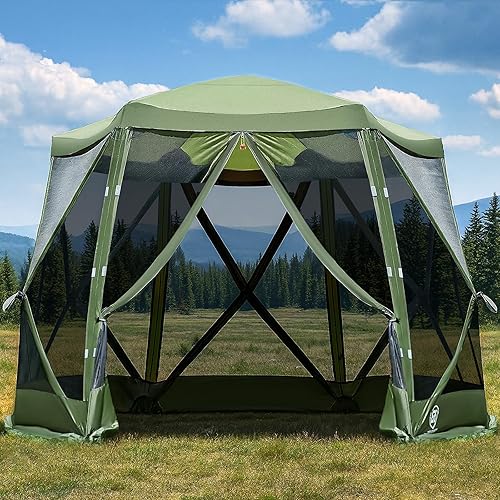
The best screen canopy for camping for most people is the Alvantor Pop-Up Screen House. Its 10 x 10 ft footprint, 12 lb weight, fiberglass frame and 6 mesh walls make it easier to carry than the larger steel-frame shelters.
Choose the VEVOR Pop Up Gazebo Screen Tent 6 when detachable privacy cloths matter. For an existing canopy, FLAGLY adds bug netting without making you carry another frame.
This roundup takes a different angle from a general screen-house list. It focuses on camping decisions: packed weight, usable floor area, privacy, rain cover, setup style and whether you need a complete shelter or only an enclosure.
Our picks at a glance
-
1

-
2
-
3
- 4
 Check it
VEVOR 12x12 Six-Sided Screen Tent
Best for large groups - 5
 Check it
FLAGLY 10x10 ft Mosquito Netting for Pop
Best for an existing canopy - 6
 Check it
Quictent 10'x10' Pop up Screened Canopy Tent
Best for rain and sun cover - 7
 Check it
Amazon Basics Screened Canopy Tent
Best for tall headroom - 8
 Check it
Aoxun 12x12 Pop-Up Screen Tent
Best for private shaded space - 9
 Best for maximum floor spaceCheck it
The best screen canopy for camping by campsite need
These products are ordered by score, with the Alvantor as the overall pick. The scores weigh specs and features against the needs of campers who want shade, airflow and insect protection in a portable shelter.
Alvantor Pop-Up Screen House: Best for most campers
- 10 x 10 x 7 ft shelter
- Fiberglass frame
- 6 mesh walls
- UPF 50+ fabric top
A light pop-up screen house with full mesh walls, a UPF 50+ top and included sandbags, guylines and stakes.
Pros
- Light carry weight
- 360-degree mesh ventilation
- Compact 39.3 in carry bag
Cons
- Not waterproof or rainproof
- Not recommended in 24–30.8 mph wind
EVER ADVANCED Pop up Screen House Tent: Best for quick solo setup
- 11.5 x 9.8 ft shelter
- One-minute pop-up design
- UPF 50 protection
- Water-repellent polyester
A roomy fiberglass screen house that fits a picnic table and folds to a trunk-friendly 54 x 7.8 in size.
Pros
- Quick pop-up setup
- Fits a picnic table
- Compact folded shape
Cons
- Heavier than Alvantor
- Smaller footprint than 12 x 12 picks
VEVOR Pop Up Gazebo Screen Tent 6: Best for adjustable privacy
- 11.5 x 11.5 ft shelter
- 6 removable wind cloths
- Mesh windows
- UPF 50+ protection
A large six-sided pop-up shelter with detachable privacy cloths, mesh windows and a thickened Oxford fabric top.
Pros
- Privacy panels included
- Large interior
- Wind ropes and luminous stakes
Cons
- 15 kg weight
- Heavier than the lightest screen houses
VEVOR 12x12 Six-Sided Screen Tent: Best for large groups
- 12 x 12 ft shelter
- 6 removable wind cloths
- B3 gauze netting
- 300D Oxford fabric
A spacious six-sided canopy with full mesh netting, windowed wind cloths and a steel frame.
Pros
- Largest shared footprint among key picks
- Privacy cloths
- Reinforced corners
Cons
- 32 lb weight
- Heavier frame than fiberglass models
FLAGLY 10x10 ft Mosquito Netting for Pop: Best for an existing canopy
- Fits a 10 x 10 ft pop-up canopy
- Zippered doors
- Breathable mesh
- Attachment straps
A lightweight enclosure that adds bug protection to a compatible 10x10 canopy you already own.
Pros
- Lightest option here
- Zippered access
- Airflow and visibility
Cons
- No frame included
- No UV protection or water resistance
Quictent 10'x10' Pop up Screened Canopy Tent: Best for rain and sun cover
- 10 x 10 ft shelter
- 420D Oxford fabric
- Velcro mesh seal
- Wheeled carry bag
A full canopy and screen enclosure with a waterproof, UV-protective top and a wheeled carry bag.
Pros
- Waterproof top
- Tight Velcro screen seal
- Wheeled transport bag
Cons
- Heaviest model here
- Steel frame adds carrying weight
Amazon Basics Screened Canopy Tent: Best for tall headroom
- 12 x 12 ft shelter
- 92 in center height
- 4-sided zippered enclosure
- UPF50+ top
A tall 12 x 12 ft screened shelter with a movable shade panel and included ground stakes.
Pros
- 92 in center height
- Large floor area
- UPF50+ protection
Cons
- 7.7 kg weight
- No floor included
Aoxun 12x12 Pop-Up Screen Tent: Best for private shaded space
- 12 x 12 ft shelter
- 6 detachable wind cloths
- Alloy steel frame
- Mesh windows
A large six-sided pop-up shelter with privacy cloths, mesh windows and an alloy steel frame.
Pros
- Large 144 sq ft area
- Privacy panels
- 90 in height
Cons
- 37.5 lb carry weight
- Below the larger VEVOR on score
CAMPROS 13x13 Screen House: Best for maximum floor space
- 13 x 13 ft shelter
- 134 sq ft shade
- 86 in center height
- Carry bag, stakes and tie-downs
The broadest footprint here, with mesh walls, a polyester top and room for family camping activities.
Pros
- Largest stated floor area
- 86 in center height
- Water-resistant top
Cons
- 3 people for a 10-minute setup
- No attached floor
Alvantor Pop-Up Screen House: Best for most campers
- 10 x 10 x 7 ft shelter
- Fiberglass frame
- 6 mesh walls
- UPF 50+ fabric top
A light pop-up screen house with full mesh walls, a UPF 50+ top and included sandbags, guylines and stakes.
Pros
- Light carry weight
- 360-degree mesh ventilation
- Compact 39.3 in carry bag
Cons
- Not waterproof or rainproof
- Not recommended in 24–30.8 mph wind
The Alvantor Pop-Up Screen House is the best choice for most campers because it gives you a full 10 x 10 ft shelter without the 40 lb carry weight of the Quictent. Its fiberglass frame and automatic pop-up design suit a campsite where you want to move from the car to a shaded eating area quickly.
Six mesh wall panels provide airflow and views in every direction. The fabric top adds UPF 50+ sun protection, while the included 6 sandbags, 12 guylines and 12 metal stakes give you several ways to anchor it.
The 12 lb weight is a major advantage beside the larger steel-frame options. The trade-off is weather range: Alvantor describes this shelter as not waterproof or rainproof and advises taking it down in extreme bad weather.
The 39.3 in carry-bag diameter also matters when trunk space is tight. Choose it for lightweight camping, picnics and daytime shelter where sun and bugs are the main problems.
Its 7 ft height is enough for normal sitting and standing use, but it is lower than the Amazon Basics shelter's 92 in center height. The optional floor is a separate purchase, so plan to use the canopy over the campsite surface unless you add that accessory.
EVER ADVANCED Pop up Screen House Tent: Best for quick solo setup
- 11.5 x 9.8 ft shelter
- One-minute pop-up design
- UPF 50 protection
- Water-repellent polyester
A roomy fiberglass screen house that fits a picnic table and folds to a trunk-friendly 54 x 7.8 in size.
Pros
- Quick pop-up setup
- Fits a picnic table
- Compact folded shape
Cons
- Heavier than Alvantor
- Smaller footprint than 12 x 12 picks
The EVER ADVANCED Pop up Screen House Tent suits campers who want a little more interior room than a 10 x 10 shelter and still want a fiberglass frame. Its 11.5 x 9.8 ft layout fits up to 6 people and can hold a picnic table with chairs.
The pop-up design needs no initial assembly, and the packed size of 54 x 7.8 in fits the trunk of many cars. That makes it practical for road trips where the shelter rides with other camping gear.
Its polyester fabric has water-repellent and UPF 50 protection, but the product guidance says not to leave it in a storm for a long time. The 21.5 lb weight is heavier than Alvantor, yet still below the steel-frame picks.
Pick this model for a picnic-table layout and quick setup. Pick Alvantor instead when every pound and every inch of packed space matter.
The slightly longer footprint gives a table more usable length, while the 71 in listed height makes it a different fit from the taller 12 x 12 shelters. Its solid bug-proof mesh is intended to keep insects out without removing the breeze, so it works well for eating and sitting rather than as a weather shelter.
VEVOR Pop Up Gazebo Screen Tent 6: Best for adjustable privacy
- 11.5 x 11.5 ft shelter
- 6 removable wind cloths
- Mesh windows
- UPF 50+ protection
A large six-sided pop-up shelter with detachable privacy cloths, mesh windows and a thickened Oxford fabric top.
Pros
- Privacy panels included
- Large interior
- Wind ropes and luminous stakes
Cons
- 15 kg weight
- Heavier than the lightest screen houses
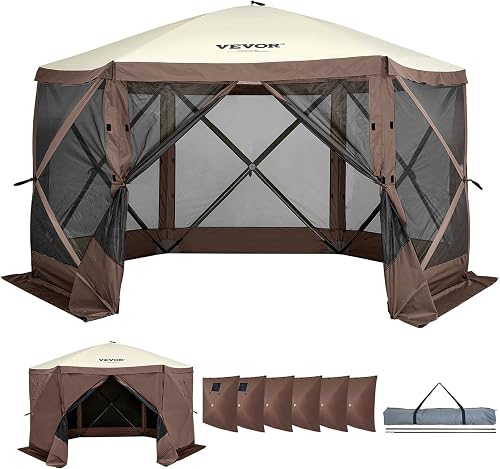
The VEVOR Pop Up Gazebo Screen Tent 6 is the strongest privacy pick in this group. Its 11.5 x 11.5 ft floor gives you more room than a 10 x 10 shelter, and 6 detachable wind cloths let you close the sides when you want a more private campsite room.
Two of the cloths have windows, so privacy does not require sealing every side. The 300D Oxford fabric top provides UPF50+ protection, while the mesh windows keep the shelter from feeling closed in.
Fiberglass poles keep it lighter than the steel-frame VEVOR 12 x 12 model, but its 15 kg weight still needs a clear carrying plan. Wind ropes and luminous ground stakes support campsite anchoring.
Choose it for family meals, changing areas or a campsite where privacy panels are worth the extra weight. The Alvantor is easier to carry, while this VEVOR gives you more control over the sides.
The 7.5 ft maximum ceiling provides useful headroom for people standing around a table. The removable panels also let you change the shelter during the day, using mesh for airflow and selected cloths when you want less visibility or protection from a breeze.
VEVOR 12x12 Six-Sided Screen Tent: Best for large groups
- 12 x 12 ft shelter
- 6 removable wind cloths
- B3 gauze netting
- 300D Oxford fabric
A spacious six-sided canopy with full mesh netting, windowed wind cloths and a steel frame.
Pros
- Largest shared footprint among key picks
- Privacy cloths
- Reinforced corners
Cons
- 32 lb weight
- Heavier frame than fiberglass models
The VEVOR 12x12 Six-Sided Screen Tent is the best large-group choice when you want a 12 x 12 ft shelter with full mesh and removable privacy cloths. Its stated capacity reaches 8 people, leaving room for chairs and shared meals.
The 300D Oxford fabric and B3 gauze netting create a more enclosed structure than a simple net accessory. Six wind cloths add privacy, and 2 include windows for airflow.
An alloy steel frame gives this model a different carrying profile from the fiberglass shelters. At 32 lb, it needs more effort to move from the vehicle, but that weight suits a semi-permanent campsite layout better than a quick lunch stop.
The product includes stakes, guy ropes, a storage bag and reinforced corners. Stop using it during heavy rain or storms, as recommended for this shelter.
Choose it when your group needs a large shared room. Choose the lighter VEVOR 11.5 x 11.5 model when privacy matters but transport is harder.
Its 144 sq ft footprint is the largest among the main 12 x 12 choices here, although the listed coverage field gives a different figure. Use the floor dimensions for planning chairs and tables, and leave space around the sides for ropes and entry.
FLAGLY 10x10 ft Mosquito Netting for Pop: Best for an existing canopy
- Fits a 10 x 10 ft pop-up canopy
- Zippered doors
- Breathable mesh
- Attachment straps
A lightweight enclosure that adds bug protection to a compatible 10x10 canopy you already own.
Pros
- Lightest option here
- Zippered access
- Airflow and visibility
Cons
- No frame included
- No UV protection or water resistance
The FLAGLY 10x10 ft Mosquito Netting for Pop is the right choice if you already own a compatible 10 x 10 pop-up canopy. It weighs 3.4 lb because it is netting only, so you do not carry a second frame.
Attachment straps hold the enclosure to the canopy, and zippered doors make entry easier than lifting a loose net wall. Breathable mesh maintains airflow and visibility while blocking flying insects around the eating or sitting area.
This is not a complete screen house. It does not supply a roof, frame or sun protection, and its material is not water resistant.
Your existing canopy supplies the overhead cover, so compatibility and attachment points matter.
Choose FLAGLY when your current canopy already fits the 10 x 10 design. If you need one complete shelter in a bag, the Alvantor or Quictent is a better match.
The accessory has a 100 sq ft stated floor area, matching the common 10 x 10 canopy format. It is useful when the frame and top are already stored with your camping equipment, but less useful for a new setup because buying the canopy remains necessary.
Quictent 10'x10' Pop up Screened Canopy Tent: Best for rain and sun cover
- 10 x 10 ft shelter
- 420D Oxford fabric
- Velcro mesh seal
- Wheeled carry bag
A full canopy and screen enclosure with a waterproof, UV-protective top and a wheeled carry bag.
Pros
- Waterproof top
- Tight Velcro screen seal
- Wheeled transport bag
Cons
- Heaviest model here
- Steel frame adds carrying weight
The Quictent 10'x10' Pop up Screened Canopy Tent is the best pick for campers who want a complete canopy with stronger rain and sun coverage. Its 420D Oxford fabric has a silver coating for UV protection and a PU layer for waterproofing.
The 10 x 10 floor gives you 100 sq ft, while the full Velcro screen design seals the mesh around the canopy. That makes it useful for meals where gaps around the sides would let insects in.
The trade-off is transport. Its alloy steel frame and 40 lb weight make it the heaviest product in this roundup, although the wheeled carry bag reduces the strain across a campground or event space.
Choose Quictent for a car-access campsite, wetter conditions and a canopy that serves as both roof and bug enclosure. Pick Alvantor for a lighter shelter when rain protection is not the main priority.
The wheeled bag changes how the weight feels after packing, especially when the ground between the vehicle and site is smooth enough to roll. The Velcro design also creates a tighter screen seal than an open mesh accessory, but it adds more material and setup weight.
Amazon Basics Screened Canopy Tent: Best for tall headroom
- 12 x 12 ft shelter
- 92 in center height
- 4-sided zippered enclosure
- UPF50+ top
A tall 12 x 12 ft screened shelter with a movable shade panel and included ground stakes.
Pros
- 92 in center height
- Large floor area
- UPF50+ protection
Cons
- 7.7 kg weight
- No floor included
The Amazon Basics Screened Canopy Tent suits campers who value headroom and a broad 12 x 12 footprint. Its 92 in center height is taller than the 7 ft Alvantor and the 86 in CAMPROS, giving adults more room to stand and move.
A 4-sided zippered screen enclosure keeps the sides closed while allowing ventilation. The top and movable shade panel provide UPF50+ protection, and the fiberglass and metal frame balances the large footprint with a 7.7 kg weight.
The shelter holds up to 8 people, but it has no floor. That keeps entry simple and reduces packed parts, yet ground conditions still affect how comfortable the interior feels.
Choose it for group camping, tall users and events where a 12 x 12 room matters. Choose VEVOR when removable privacy cloths are more useful than a taller center.
The included ground stakes help with basic anchoring, while the four-sided zipper gives the enclosure a clear entry system. Its mixed fiberglass and metal frame sits between the lightest fiberglass designs and the heavier alloy steel models in this group.
Aoxun 12x12 Pop-Up Screen Tent: Best for private shaded space
- 12 x 12 ft shelter
- 6 detachable wind cloths
- Alloy steel frame
- Mesh windows
A large six-sided pop-up shelter with privacy cloths, mesh windows and an alloy steel frame.
Pros
- Large 144 sq ft area
- Privacy panels
- 90 in height
Cons
- 37.5 lb carry weight
- Below the larger VEVOR on score
The Aoxun 12x12 Pop-Up Screen Tent is a good fit for campers who want a large private room with six detachable wind cloths. The 12 x 12 footprint gives 144 sq ft, and 2 of the cloths have windows to balance privacy and airflow.
Its thickened 300D Oxford fabric and polyester mesh provide a shaded screened area, while the alloy steel frame, windproof ropes and luminous ground stakes support anchoring. A double-sided zipper helps people enter from either direction.
At 37.5 lb, it is close to the Quictent in carrying weight and heavier than the fiberglass shelters. That makes it better for a base-camp setup than a campsite where you move the shelter several times each day.
Pick Aoxun for a large private gathering area. Pick the VEVOR 12x12 model for a similar layout with a higher score and a stated capacity of up to 8 people.
The 90 in height gives the interior more vertical room than the VEVOR's 7.5 ft maximum by a small amount, while the six-sided layout keeps the shelter suited to gatherings. Its waterproof description supports a more covered setup, but the privacy cloths still need to be managed according to the airflow you want.
CAMPROS 13x13 Screen House: Best for maximum floor space
- 13 x 13 ft shelter
- 134 sq ft shade
- 86 in center height
- Carry bag, stakes and tie-downs
The broadest footprint here, with mesh walls, a polyester top and room for family camping activities.
Pros
- Largest stated floor area
- 86 in center height
- Water-resistant top
Cons
- 3 people for a 10-minute setup
- No attached floor
The CAMPROS 13x13 Screen House gives you the broadest footprint in this roundup. Its stated 140 sq ft floor area and 13 x 13 size suit family camping when chairs, a table and coolers need to fit under one roof.
The 86 in center height allows comfortable standing for many users, while the 190T polyester top provides UV resistance. The shelter includes a carry bag, ground stakes and tie-downs, and the top is described as water resistant.
Setup is more involved than the automatic pop-up picks. CAMPROS says 3 people can set it up in 10 minutes, so it fits a group campsite better than a solo lunch stop.
Choose CAMPROS when floor space comes first and several people can help with setup. Choose Amazon Basics for a similar large shelter with a taller 92 in center height.
The 6.2 kg weight is lower than the steel-frame large shelters, but the setup requirement changes its practical use. It is a strong match for family trips where the shelter can be assembled once and left in place for the day.
How these camping screen canopies compare
The best overall balance is Alvantor, while the other picks win on specific camping jobs. Use the table to compare the measurements that affect daily setup, carrying and seating.
| Product | Best for | Size | Frame | Weight | Our score |
|---|---|---|---|---|---|
| Alvantor Pop-Up Screen House | most campers | 10 x 10 x 7 ft | Fiberglass | 12 lb | 8.9 |
| EVER ADVANCED Pop up Screen House Tent | quick solo setup | 11.5 x 9.8 ft | 21.5 lb | 8.8 | |
| VEVOR Pop Up Gazebo Screen Tent 6 | adjustable privacy | 11.5 x 11.5 ft | Fiberglass | 8.7 | |
| VEVOR 12x12 Six-Sided Screen Tent | large groups | 12 x 12 ft | Alloy steel | 8.5 | |
| FLAGLY 10x10 ft Mosquito Netting for Pop | an existing canopy | 3.4 lb | 8.4 | ||
| Quictent 10'x10' Pop up Screened Canopy Tent | rain and sun cover | 10 x 10 ft | Alloy steel | 40 lb | 8.2 |
| Amazon Basics Screened Canopy Tent | tall headroom | 12 x 12 x 92 in | Fiberglass and metal | 8.0 | |
| Aoxun 12x12 Pop-Up Screen Tent | private shaded space | 12 x 12 x 90 in | Alloy steel | 37.5 lb | 7.6 |
| CAMPROS 13x13 Screen House | maximum floor space | 13 x 13 ft | Fiberglass | 7.3 |
Alvantor and EVER ADVANCED use fiberglass frames and pop-up designs, which keeps setup simple. VEVOR, Aoxun and Quictent use heavier structures that make more sense when the shelter stays in one place for longer.
The floor area also changes how you camp. A 10 x 10 shelter works for a small table and chairs, while 12 x 12 and 13 x 13 models give a group more room to move around.
The enclosure style matters as much as the footprint. Full mesh walls help with airflow and visibility, detachable wind cloths add privacy, and a waterproof top changes whether the shelter is mainly for sunny meals or can also cover a wet-weather rest area.
How we compared the screen canopies
We compared each shelter by camping use rather than by one feature. The score considers frame material, stated size, carry weight, screen design, sun or rain coverage, privacy options and setup details.
We also separated complete shelters from accessories. FLAGLY ranks highly because it solves a real problem for someone who already owns a 10 x 10 canopy, but it is not a substitute for a framed screen house.
For a broader look at a dedicated screen house for camping, compare how a full enclosure differs from the canopy-style picks here. The right choice depends on whether your priority is a fast shaded meal area, a private room or a weather-ready canopy.
We treated product warnings as part of the comparison. A canopy that is light and quick to open may still need to come down in extreme weather, while a larger shelter may require more people, more ground space or a vehicle-access campsite.
What size screen canopy works best for camping?
A 10 x 10 canopy is the easiest starting point for small groups, while 12 x 12 and 13 x 13 shelters suit tables, chairs and larger gatherings. Measure the packed vehicle space as well as the campsite footprint.
Choose 10 x 10 for compact campsites
Alvantor, FLAGLY and Quictent use the 10 x 10 format. It gives 100 sq ft, which is enough for a small table, several chairs or a food-prep area without taking over the campsite.
FLAGLY requires a separate canopy. Alvantor includes the shelter, while Quictent adds a waterproof top and steel frame.
Choose 12 x 12 or larger for shared meals
The VEVOR, Amazon Basics and Aoxun shelters add room for group seating. CAMPROS reaches 13 x 13, but its 3-person setup makes it less convenient for solo campers.
A larger floor also needs more level ground and more clear space around the edges. Mark out the footprint before unfolding the shelter beside your tent.
The usable space will be smaller once a table, chairs, coolers and bags are inside. A 12 x 12 model gives more flexibility, but a 10 x 10 shelter can be easier to place on a crowded campsite and easier to pack with other gear.
Do you need a full screen house or canopy walls?
Choose a full screen house when you need a roof and frame together. Choose walls or netting when you already own a compatible canopy and want to add insect protection.
Use FLAGLY with an existing 10x10 canopy
FLAGLY is the lightest way to add mesh enclosure to a 10 x 10 canopy. Its straps and zippered doors make it useful for a known setup, but it cannot replace the canopy roof.
Read about screen walls for a 10x10 canopy if you are deciding between netting, solid sidewalls and a complete screen shelter.
Choose a complete shelter for simpler packing
Alvantor, EVER ADVANCED and the other framed picks combine the top, mesh sides and support structure. That usually means more weight than netting alone, but there are fewer separate parts to match at camp.
This distinction also affects setup decisions. With an accessory, you must confirm that the existing canopy has the right dimensions and attachment points, while a complete shelter is designed as one enclosure.
Which screen canopy is easiest to carry?
Alvantor is the easiest full shelter to carry at 12 lb, while FLAGLY is the lightest accessory at 3.4 lb. Quictent is the heaviest complete option at 40 lb.
Packed size matters along with weight. EVER ADVANCED folds to 54 x 7.8 in, and Alvantor uses a compact 39.3 in diameter carry bag.
These dimensions matter when the trunk already holds tents, coolers and sleeping gear.
Steel-frame shelters trade carry weight for a more substantial structure. If you drive close to the campsite, the extra weight matters less than it would on a walk-in site.
Also consider how far the shelter travels after it leaves the car. A wheeled bag helps with the Quictent on suitable ground, while a 12 lb fiberglass shelter is easier to lift over uneven paths or reposition during the day.
Which canopy is best for rain, sun and insects?
Quictent is the clearest choice for rain and sun coverage because its top is described as waterproof and UV protective. Alvantor is better treated as a sun-and-bug shelter because its top is not waterproof or rainproof.
For insect protection
Full mesh walls are the key feature across the roundup. Alvantor has 6 mesh panels, Quictent uses a full Velcro design, and FLAGLY creates an enclosed mesh zone when attached to a compatible canopy.
For a closer explanation of the trade-offs, read screen house vs canopy. A screened shelter controls insects, while a basic canopy mainly supplies overhead shade.
For privacy
The VEVOR 11.5 x 11.5, VEVOR 12 x 12 and Aoxun include 6 detachable wind cloths. Two windowed panels on the VEVOR and Aoxun options keep the enclosed space from becoming fully closed.
Privacy cloths also block some breeze, so use them selectively when airflow matters. Mesh-only shelters are better when ventilation is the main goal.
Rain protection and insect protection are separate features. A screened wall can keep bugs out while the top remains unsuitable for heavy rain, so choose the model based on the weather problem you expect to solve most often.
How should you set up a screen canopy at camp?
Set up on level ground, keep the entrance clear, spread the frame fully and use the supplied anchoring parts before placing food or chairs inside. A large canopy needs more open space than its floor dimensions alone suggest.
Alvantor includes sandbags, guylines and stakes. VEVOR and Aoxun include wind cloths that change how air moves through the shelter, so secure every side you plan to use.
Keep the shelter away from storms and extreme wind. Alvantor gives a specific wind warning, while the 12 x 12 VEVOR advises stopping use during heavy rain or storms.
Check the complete frame before arranging furniture. A clear entrance reduces tripping around zippers, stakes and guylines, and leaving room outside the footprint makes it easier to walk around the shelter without disturbing the anchors.
What should go inside a camping screen canopy?
Use the center for a table or shared seating, leave the door path open and keep coolers or storage along the edges. Mesh walls work best when chairs do not press against them.
For a 10 x 10 shelter, choose a smaller table and fewer chairs so people can move around it. A 12 x 12 or 13 x 13 canopy gives more flexibility for group meals, but it still needs a clear entrance and stable ground.
Do not treat a screen canopy as sleeping shelter unless its design and weather guidance support that use. These picks are mainly for shaded sitting, meals, picnics and outdoor gathering space.
Think of the shelter as a shared living zone rather than empty floor area. The table size, chair clearance and door position determine whether the stated square footage feels comfortable during an actual meal.
The verdict on the best screen canopy for camping
The Alvantor Pop-Up Screen House is the best screen canopy for camping for most people. It combines a full 10 x 10 shelter, 6 mesh walls, UPF 50+ protection and a 12 lb fiberglass frame.
Choose EVER ADVANCED for a picnic-table layout with quick pop-up setup. Choose VEVOR Pop Up Gazebo Screen Tent 6 for detachable privacy cloths, or VEVOR 12x12 for a larger group room.
Choose FLAGLY if you already own a 10 x 10 canopy. Choose Quictent when waterproof overhead cover matters most, and choose CAMPROS when maximum floor area is worth a three-person setup.
Our top 3 picks at a glance
-
1
-
2
-
3
Frequently asked questions
Can a screen canopy keep rain out?
Some canopies include water-resistant or waterproof fabric tops, but mesh walls and open edges do not create a storm shelter. Quictent has a waterproof top, while Alvantor is specifically described as not waterproof or rainproof.
Do screen canopies have floors?
Most picks here do not include an attached floor. A floor changes how you handle wet ground, food and campsite cleanup, so treat the canopy as an overhead shelter unless the product specifically includes one.
How many people fit in a camping screen canopy?
Capacity depends on the footprint and what you place inside. The products here range from about 6 people in compact designs to 8 people in several 12 x 12 ft models, with room reduced by tables, chairs and coolers.
Are fiberglass or steel frames better for camping?
Fiberglass frames usually reduce carry weight, while steel frames add structure but weigh more in these picks. Choose fiberglass for moving the shelter between campsites and steel when a heavier base suits your setup.


