Canopy vs Awning: Which Shade Fits Your Home? (October 2026)
Choose an awning for shade attached to the home, or a pop-up canopy for portable shade you can move. The canopy vs awning choice depends on where you need cover and whether it should stay in one place.
On this page (5 sections)
Choose an awning for shade attached to the home, or a pop-up canopy for portable shade you can move. The canopy vs awning decision comes down to placement, how often you need shade, and whether you want a structure that stays put.
An awning covers a patio or doorway from above and projects outward from the building. A freestanding canopy stands on its own legs, so you can place it in a yard or move it when plans change.
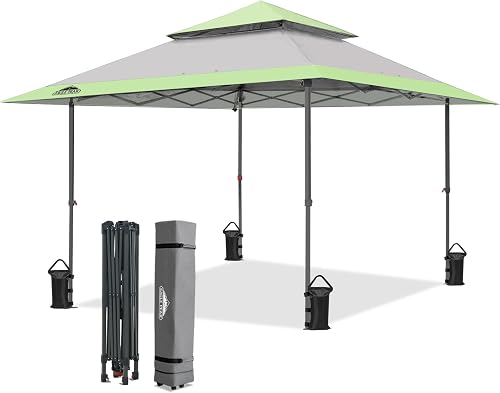
If you want portable coverage, the Crown Shades 10x10 One Push Canopy is a 100-square-foot option, while the Eagle Peak 13x13 Canopy With Extended Eaves covers 169 square feet. Neither replaces an awning when you want shade attached to the home.

 Best for a larger freestanding shade area
Eagle Peak 13x13 Canopy With Extended Eaves
Canopy vs awning: which should you choose?
Choose an awning for a regular shaded spot beside the house; choose a canopy when you need shade that can stand in different places. The right fit depends on how you use the space.
An awning can make a patio more usable during sunny parts of the day without taking up floor space with legs. A pop-up canopy gives you coverage over a dining table, chairs or an activity area, but its frame occupies part of the patio or yard.
Think about how often the shaded area changes. If you host in the yard one weekend and need shade at a market the next, portability can matter more than a fixed location.
What does “pop up canopy or awning” mean for home shade?
A pop-up canopy or awning comparison is mainly about whether the shade is freestanding or attached. Both can cover an outdoor seating area, but they fit different layouts and routines.
A freestanding canopy is useful when the best spot isn't beside a wall. It can also serve as temporary cover for a gathering, as long as the surface has room for its legs and setup.
An awning is a better match when you want a defined patio area shaded from the side of the home. Check the installation needs for the awning you are considering, including whether your wall and mounting location are suitable.
How do their coverage and placement differ?
A canopy covers a defined footprint on the ground; an awning projects shade outward from its mounting point. Compare the shaded area at the times you'll use it, not just the product's overall dimensions.
The Crown Shades canopy has a 10 x 10 ft footprint and provides 100 square feet of shade. The Eagle Peak canopy measures 13 x 13 ft and provides 169 square feet, so it needs more room around the frame.
An awning's width and projection vary by model. Before choosing one, measure the patio and note where the sun hits during meals or other outdoor activities.
Where can a canopy go?
A freestanding canopy can go over a patio table, in a garden or at another open spot with enough clearance. You can reposition it, but moving it after setup may take help, especially for a larger model.
The Crown Shades model is designed for 2 people to set up and has wheels in its feet to help move it when raised from the side without wheels. Its compact footprint may suit a smaller patio better than the larger Eagle Peak canopy.
For more space to gather, the Eagle Peak's 13 x 13 ft frame covers a larger area. Check that its full footprint fits without blocking a walkway, gate or outdoor furniture.
Where does an awning work best?
An awning works best where you want dependable shade beside the building, such as over a patio or outside a door. Its fixed position can make the area feel like a natural extension of the home.
That location also limits flexibility. If the sun shifts or you want cover away from the wall, a freestanding canopy can be easier to reposition.
Which is easier to set up and care for?
An awning avoids repeated setup, while a pop-up canopy is portable but needs opening, securing and storage. Choose based on the work you're willing to do each time shade is needed.
The Crown Shades center lock is designed for two-person setup without tools. Its canopy can stay attached when folded for storage, and the bag includes a pocket for stakes, guy ropes and sandbags.
The Eagle Peak Peak Push system is designed for one-person setup. It includes reusable weight bags and a wheeled carrying bag, but you'll still need to make room to open and store its larger frame.
An awning's setup happens during installation instead of each use. Follow the instructions for the exact model, and arrange professional help if the installation requirements are beyond your skills.
What about wind and rain?
Neither a canopy nor an awning should be treated as a safe shelter in severe weather. Secure a pop-up canopy as directed and take it down when conditions exceed its instructions.
Both canopies here have water-resistant fabric. Crown Shades describes its top as vented and designed to reduce wind lift and rain pooling, but that does not mean it is storm-proof.
For more on portable shade, see our guide to keeping a canopy from blowing away. If wind is a common concern, our best pop-up canopies for breezy days guide covers what to consider.
How do you choose the right size for a patio?
Measure the furniture area and walking paths before choosing a canopy or awning. Shade that covers the table but blocks the route to a door can make a patio harder to use.
For a freestanding canopy, mark its leg positions on the ground with tape or small markers. Then check that chairs can slide back and people can pass without hitting the frame.
For an awning, compare its width and projection with the wall space and patio depth. Consider how the shade moves through the day, since a single fixed position may not cover the same area at every hour.
Our 10x10 canopy size guide explains the footprint of a common portable size. If you're comparing different canopy dimensions, use the canopy sizes guide to plan how much floor area each one needs.
Which option fits your home?
Pick an awning if your main goal is a shaded patio attached to the house; pick a pop-up canopy if you value movable coverage or need shade in more than one place. Measure the space and consider setup before deciding.
A smaller patio may favor an awning because it doesn't add canopy legs to the floor. A canopy may suit a larger yard, a temporary gathering spot or a household that also needs portable shade away from home.
For a more permanent open-air structure, compare a canopy with a pergola. If you want portable cover for camping or events, our canopy vs tent guide explains what each structure is designed to do.
Frequently asked questions
Is a canopy or awning better for a patio?
An awning suits a patio where you want shade attached to the house, while a canopy suits a patio where movable coverage matters more. Check the patio dimensions and furniture layout first; a freestanding canopy needs room for its legs, and an awning depends on suitable mounting.
Can you leave a pop-up canopy up all summer?
A pop-up canopy is designed to be portable, so plan to take it down when you don't need it and follow its care instructions. Wind, rain and other weather can stress the frame and top, and the maker's included accessories don't guarantee that a canopy will stay secure in every condition.
Does a canopy provide more shade than an awning?
It depends on the size and position of each shade structure. These canopies cover 100 or 169 square feet, while an awning's coverage depends on the model and how far it projects from the wall; compare the shaded area at the time of day you use the patio.
Can you move an awning?
A fixed awning stays attached where it is installed, while a retractable awning can extend or retract in place. A freestanding pop-up canopy can be moved after setup, though larger models take more room and effort to position.